


Skip Navigation

Dentistry for Children of Howell

Welcome to Dentistry for Children of Howell, your trusted children’s dentist in Howell, NJ, proudly serving families throughout Monmouth and Ocean County, including Manalapan, Wall Township, Farmingdale, Freehold Township, Jackson, and Lakewood.

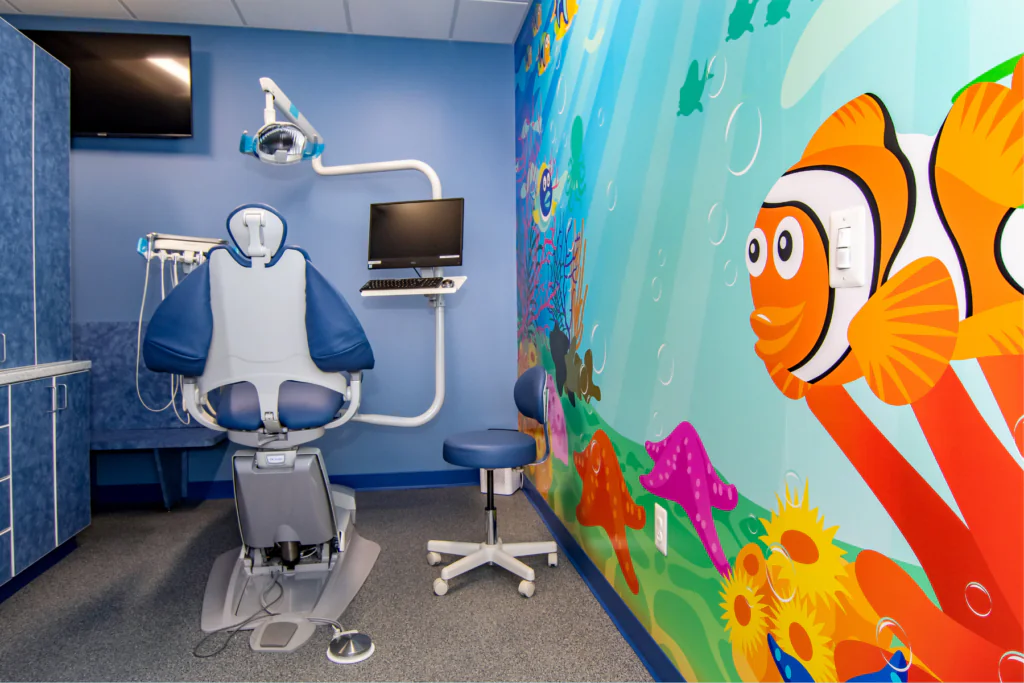
Our modern dental office at 5315 US Highway 9 was thoughtfully created for kids—bright, welcoming, and comfortable. Supported by experienced pediatric dental specialists and advanced technology, we focus on making every visit calm, positive, and stress-free for children and parents alike.

Monday-Friday
8:00 AM - 5:00 PM

What To Know Before You Go

We understand that a dental visit can feel unfamiliar for children, which is why our Howell pediatric dental team focuses on creating positive, confidence-building experiences at every appointment. Children are welcomed by name, treated with care, and encouraged to feel proud of their healthy smiles.

Our pediatric specialists use kid-friendly technology and explain each step in simple terms, helping families feel informed, comfortable, and supported throughout their visit.

Your Appointment At-a-Glance

Most pediatric dental visits last 30–45 minutes, allowing plenty of time for personalized care without feeling rushed.

At your child’s first visit to our Howell children’s dental office, our team provides a gentle cleaning, digital X-rays if needed, and a complete exam. We’ll review findings together, discuss any recommended care, and offer practical brushing and nutrition tips to support long-term oral health.

Finding Our Office

Our Dentistry for Children Howell office is located at 5315 US Highway 9 in Howell, NJ. We’re located in the Greenleaf at Howell Shopping Center, next to Texas Roadhouse and near Starbucks and BJ’s Wholesale Club.

You can reach our parking lot by traveling North on Route 9. Parking is free and conveniently located right outside our building.

5315 US Highway 9 N, Howell, NJ 07731
732-378-9989
Monday-Friday
8:00 AM - 5:00 PM

Take A Virtual Tour Of  Pediatric Dental Office In Howell City, NJ

Howell Location Services

Pediatric Dentistry in Howell

Comprehensive preventive and restorative dental care for infants, children, and teens. Our Aston pediatric dentists focus on education, comfort, and anxiety-free visits that support lifelong oral health.

Pediatric Dentistry

Dental Emergencies in Howell

Same-day pediatric dental care for toothaches, broken teeth, or urgent oral health concerns. Families in and around Aston rely on our team for timely, expert emergency dental treatment.

Dental Emergencies

Orthodontics for Kids and Teens in Howell

Early orthodontic evaluations, braces, and clear aligner options available through trusted partners. Ask our team about the Lifetime Retainer Program, designed to help protect your child’s smile if retainers are lost or damaged.

Orthodontics

Meet Our Howell Dentists

Jenna C. Winokur, DMD

Pediatric Dentist
Howell

Jenna C. Winokur, DMD

Pediatric Dentist
Howell

Dr. Winokur graduated from Georgetown University with a major in Human Science.She is a board-certified pediatric dentist.

Dr. Winokur graduated from Georgetown University with a major in Human Science.She is a board-certified pediatric dentist.

View More

Phillip Lee, DMD

Pediatric Dentist
Howell

Phillip Lee, DMD

Pediatric Dentist
Howell

Dr. Philip Lee earned his DMD degree from the University of Pennsylvania. He is excited to care for children with all types of dental needs.

Dr. Philip Lee earned his DMD degree from the University of Pennsylvania. He is excited to care for children with all types of dental needs.

View More

Bridget Henn

Orthodontist
Howell

Bridget Henn

Orthodontist
Howell

Dr. Bridget Henn is excited to serve orthodontic patients in our Toms River, Howell, and Jackson locations.

Dr. Bridget Henn is excited to serve orthodontic patients in our Toms River, Howell, and Jackson locations.

View More

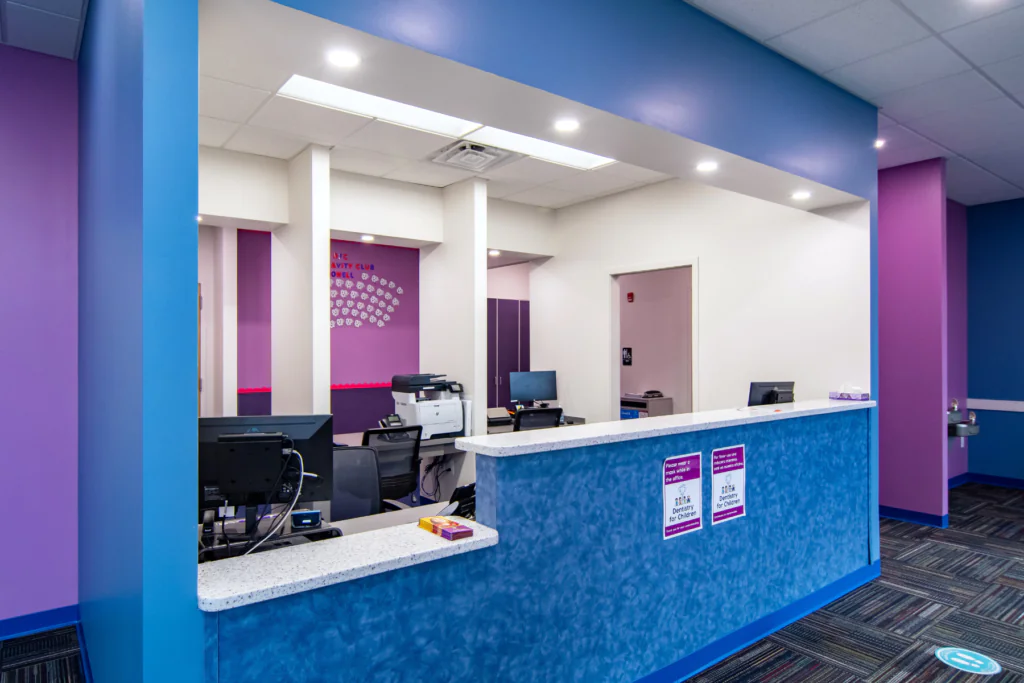
Parents should report to the front desk to check-in for their appointment.  We ask that only one parent or caregiver accompany the child(ren) to their appointment if possible.

Yes, we operate air purifiers in our clinical areas and hygiene bays.

Following each appointment, the dental chairs are wiped down with a healthcare-grade disinfectant wipe. We also rotate appointments throughout the office whenever possible to allow for necessary disinfecting and cleaning measures.

Our offices are cleaned at least once per week by a professional cleaning company in addition to our standard daily cleaning and sterilization protocols.

Based on recent guidance from the CDC, we are able to treat a patient that previously tested positive for COVID-19 if it has been at least 14 days since the diagnosis AND at least 10 days since the symptoms subsided.

Because the coronavirus is spread through airborne droplets, we have made changes to some of our in-office dental procedures.  Some of these changes include air purifiers and isolation systems to be used during aerosol procedures.

Dentistry for Children has always followed stringent infectious disease controls, even before the coronavirus pandemic. Our offices follow the standards and guidelines set forth by our state Boards of Dentistry, the Centers for Disease Control, and the American Dental Association.

All patients and visitors are asked to self-monitor.  We have signs posted throughout the offices asking for all patients and visitors to not enter the facility if they are experiencing any signs and/or symptoms or if they have experienced any signs and/or symptoms in the past 48-hours.

At the start of every shift, all employees are screened following current self-monitoring guidelines. Employees that do not pass the screenings are not permitted to enter the facility.  Our employees are constantly provided with trainings and resources regarding to COVID and infection control.

Our staff is not subject to a COVID-19 test every day.

Our waiting rooms can be busy places. To limit the number of people in these spaces, and to allow for proper social distancing, we ask that only one parent or caregiver accompany the child(ren) to their appointment. 

We have also implemented a buzzer system to allow families to wait in their car after check-in until they are ready to go back. If you’ve arrived at our office by public transportation or another means that doesn’t allow you to wait in a car, please notify the front desk for accommodations.

Our dentists and clinical staff wears a full kit of personal protective equipment (PPE) including, but not limited to:

  • a KN95 mask covered by a surgical mask, 
  • a face shield and/or goggles 
  • Single-use gloves, 
  • Disposable protective gowns

Our front desk and non-clinical staff also wear a surgical mask while in our offices.

Our offices are taking an abundance of precautions to minimize the risk of spreading infectious diseases, including the coronavirus. This includes enhanced sterilization and cleaning procedures, stringent PPE requirements, adding physical barriers to our front desks and hygiene bays.

According to a recent study by the American Academy of Pediatric Dentistry (AAPD), “Oral health care is a medical necessity and has been found to be safe for patients during the COVID-19 pandemic.”

Thumb sucking is a normal habit for many children. Its peak occurrence is at about age two and it can be an important source of pleasure for an infant or toddler. This habit is usually nothing to worry about since your child will usually outgrow the habit. However, if they continue to suck their thumb past age 4, dental problems such as malocclusion may occur.

There are many different factors that can cause tooth discoloration. An abnormally colored tooth is anything other than the yellowish-white to the white color of normal teeth. The factors that contribute to tooth color include congenital conditions, genetics, infections, and environmental factors. Abnormal color and shape may be caused by a malfunction in body processes. Some of these factors can influence the way your child’s enamel is formed, while others simply stain the enamel. Teeth may be uniformly discolored or it may appear as spots or lines in enamel. In addition, discolored areas may have a different density and porosity than normal enamel. The color and hardness of enamel can also be affected by drugs or medications taken by either the child during the time of tooth development or by the mother while pregnant.

Even children’s sports involve contact, and we recommend mouthguards for children active in sports. If your little one plays baseball, soccer, or other sports, ask your dentist about having a custom-fitted mouthguard made to protect their teeth, lips, cheeks, and gums.

Start flossing your child’s teeth when you notice their teeth touching. Floss your child’s teeth for them until they are old enough to do so themselves, which usually happens by age six or seven. It is recommended that parents should still help and supervise with flossing until the age of ten.

Choose a child’s toothbrush with a small head and soft bristles. You can choose a manual or electric toothbrush.

Sit your child on your lap, facing away from you. Cup their chin with one hand, with their head resting against your body. Brush teeth and along the gum line. Brush gently in small circles. Clean every tooth thoroughly and brush the inside, outside and chewing surfaces of teeth.

Replace your child’s toothbrush every 3-4 months or when your child is sick.

X-rays help dentists make sure your child’s teeth and jaw are healthy and properly aligned, can help identify if there are any cavities that they are not able to clinically see. The digital images allow us to enlarge images for a better view and can be instantly manipulated to help our team make a better diagnosis, which results in better care and better treatment for your child.

It is recommended to schedule dental cleanings and checkups every six months.

The American Dental Association recommends dental checkups be scheduled by their first birthday or by the age of 1 year old.

We accept most major insurance carriers including NJ FamilyCare and Medicaid. We also have cash-pay programs for patients without dental insurance. You can find a full list of insurances we accept here.

An orthodontist is a doctor who specializes in the field of dentistry that aims to diagnose, treat, and prevent dental irregularities. This includes crooked teeth, misaligned bites, and other conditions that affect the look and function of the face and jaw. A children’s orthodontist has completed several years of training in addition to dental school, allowing him or her to successfully correct dental irregularities in adolescents.

An orthodontist’s goal is to allow for a healthy and functional “bite” in addition to a great smile by employing a variety of appliances and treatment. Orthodontists are responsible for placing fixed appliances, like braces, which use gentle pressure to move teeth into proper alignment. When your child visits an orthodontist, he or she will receive a thorough orthodontic examination. Then, the orthodontist will determine which treatment, if any, is required.

While it’s not required, the American Association of Orthodontists recommends that all children by the age of seven visit an orthodontist to assess potential tooth and jaw problems so that corrective action or treatment can take place through early intervention. Many of our patients are referred by their Dentistry for Children dentist or family dentist, while others take the initiative to schedule an examination themselves to best enhance their child’s smile.

The American Association of Orthodontists recommends an orthodontic screening at age 7. By this age, several permanent teeth in most children have erupted, allowing us to effectively evaluate your orthodontic condition. If our child is older than 7, an evaluation or check-up should be scheduled as soon as possible to allow for adequate treatment plans.

Yes, some orthodontic problems are significant enough to require early intervention. However, if a patient is not yet ready for treatment, we will follow that patient’s growth and development until the time is right for treatment to begin.

There are five essential questions that our orthodontists will cover during the initial examination:

  • Is there an orthodontic problem, and if so, what is it?
  • What must be done to correct the problem?
  • Will any teeth need to be removed?
  • How long will the treatment take to complete?
  • How much will the treatment cost?

When a baby tooth is lost early, the teeth on either side can tend to tilt or drift into the empty space that is left behind. When this happens, crowding can occur and result in a lack of space in the jaw for your child’s permanent teeth to erupt. In this situation, your child’s dentist or orthodontist may recommend using space maintainers to maintain the space previously occupied by the baby tooth to avoid loss of space.

Braces are used by your orthodontist to help you improve the look and feel of your smile through the proper alignment of both the teeth and jaw. There are several different types of braces to choose from, including:

  • Clear braces
  • Traditional metal braces
  • Invisible aligners

The orthodontists at Dentistry for Children offer both clear braces and traditional metal braces.

Each child’s treatment plan and the amount of time spent in braces will vary depending on the individual patient, because every smile responds differently to treatment. Treatment can take anywhere between 6 and 30 months, however, most standard treatments take approximately 20-24 months.

Yes. There is no reason to miss school because of orthodontic treatment. We will be happy to provide your child with a school excusal note to return with that day.

With any fixed appliance, you should brush your teeth at least three times a day to keep your teeth, gums, and mouth healthy and clean. Brushing regularly will help remove any food that may be caught around the appliances. You should also floss daily to reach the areas where your brush cannot. Your orthodontist can show you how to properly brush and floss once your appliances are placed.

Yes! In fact, it’s even more important that patients receiving orthodontic treatment visit their dentist regularly. With braces, food may be caught in places that the toothbrush can’t reach. This causes bacteria to build up that can lead to cavities, gingivitis, and gum disease. Your child’s dentist will work closely with your orthodontist to make sure that your teeth stay clean and healthy while wearing braces.

By having both pediatric dentists and orthodontists under the same roof at Dentistry for Children, our patients benefit from the continuous collaboration of our dental professionals.

Playing an instrument or a contact sport may require some adjustment when your child first gets their braces, but wearing braces will not stop a child from participating in any school activities. If your child plays a contact sport, it is recommended that he/she wear a mouthguard to protect any braces or appliances. Your Dentistry for Children team can help you with obtaining a specially made mouthguard that best suits their athletic and oral health needs.

Please feel free to contact the office if you are experiencing any discomfort or if you have any questions. Below are a few simple steps that might help if you are unable to contact us or if you need a “quick fix:”

Loose Bracket

Occasionally, a bracket may come loose. You can remove the loose bracket and save it in an envelope to bring to the office or leave it where it is, if it is not causing any irritation. Call the office as soon as possible in order for us to allow time to replace the bracket.

Poking Wire

If a wire is poking your child’s gums or cheek, there are several things you can try until you can get to the office for an appointment. First, try a ball of orthodontic wax on the wire that is causing the irritation. You may also try using a clean nail clipper or cuticle cutter to cut the extra piece of wire that is sticking out. Sometimes, a poking wire can be safely turned down so that it no longer causes discomfort. To do this you may use a pencil eraser, or some other smooth object, and tuck the offending wire back out of the way.

Wire Out of Back Brace

Please be careful to avoid hard or sticky foods that may bend the wire or cause it to come out of the back brace. If this does happen, you may use clean needle nose pliers or tweezers to put the wire back into the hole in the back brace. If you are unable to do this, you may clip the wire to ease the discomfort. Please call the office as soon as possible to schedule an appointment to replace the wire.

Poking Elastic (Rubber Band) Hook

Some brackets have small hooks on them for elastic wear. These hooks can occasionally become irritating to the lips or cheeks. If this happens, you may either use a pencil eraser to carefully push the hook in, or you can place a ball of orthodontic wax on the hook to make the area feel smooth.

Sore Teeth

You may be experiencing some discomfort after beginning treatment or at the change of wires or adjusting of appliances. This is normal and should diminish within 24-72 hours. A few suggestions to help with the discomfort:

  • Rinse with warm water, eat a soft diet, take acetaminophen (Tylenol) or ibuprofen (Advil) as directed on the bottle.
  • Chewing on the sore teeth may be sorer in the short term but feel better faster.
  • If pain persists more than a few days, call our office.

A Registered Dental Assistant (RDA) plays an important role in a dental office, preparing duties that include patient, chair and administrative work. Each is required to have state and radiology certifications, in addition to meeting the necessary guidelines to work in this field.  Their responsibilities may include, preparing treatment rooms before procedures, reviewing dental records, ensuring each patient is comfortable and taking and developing x-rays. An RDA may also provide technical assistance to the pediatric dentist, such as applying anesthesia or pain medication during a cavity filling.

Dentistry for Children is a leading provider of pediatric dental services to the central New Jersey community. Our pediatric dentists and highly-trained professional staff are trustworthy, passionate about what they do, and are dedicated to providing only the finest pediatric dental care possible for every child they see—regardless of need. It is our priority that our patients and their parents and caregivers enjoy their time with us. Whether it be through our fun, engaging offices, our caring and gentle approach to dental treatments, or through our dedication to educating as well as healing, we do all we can to make sure you and your child feels safe, confident, and comfortable.

Pediatric dentists are specialists in treating the unique needs of children. A pediatric dentist has completed an additional two to three years of specialty training beyond dental school. He/she specifically treats the oral health needs of infants and children through adolescence, including those with special health needs. Pediatric dentists are skilled at using smaller equipment designed for a child’s mouth and better understand the intricacies and importance of baby teeth in a growing child. They also focus more attention on educating patients and parents about preventive care to help children avoid complications such as decay, infection, speech problems, and cosmetic issues. Furthermore, we complete a detailed risk assessment on each patient so it can provide additional support and services to the children who need it the most.

The American Academy of Pediatric Dentistry recommends that children start seeing a dentist every six months, by their first birthday or once their first tooth emerges.

Primary, or “baby,” teeth are important for many reasons. Not only do they help children speak clearly and chew naturally, they also aid in forming a path that permanent teeth can follow when they are ready to erupt.

It is important to remember that oral health affects more than the health of your teeth. Cavities in baby teeth cause pain and swelling that can be tremendously uncomfortable for your child. Oral infections can enter the blood stream and lead to other serious health problems. Bacteria can quickly ‘jump’ from one part of the mouth to another, thus resulting in infections and cavities in new erupting adult teeth.

There is absolutely no difference between a DMD and a DDS degree in the United States. According to the American Dental Association: “The DDS (Doctor of Dental Surgery) and DMD (Doctor of Dental Medicine) are the same degree. They are awarded upon graduation from dental school to become a general dentist. The majority of dental schools award the DDS degree; however, some award a DMD degree. The education and degrees are, in substance, the same.”

It’s best to have your child avoid eating anything heavy within 30 minutes before your child’s appointment. Children shouldn’t eat for 30 minutes after fluoride treatments. Following a visit involving the use of Novocain, children should not eat anything crunchy or chewy until the numbness wears off (usually about 2 hours); however, they can eat soft, mushy foods after their visit.

The sooner the better! Starting at birth, clean your child’s gums with a soft infant toothbrush or clean washcloth and water. Parents should use a very tiny smear of fluoride toothpaste (too much fluoride can make a baby sick) to brush baby teeth twice daily as soon as they erupt, along a soft, age-appropriate sized toothbrush.

Although fluoride use has greatly reduced the incidence of cavities in children, its success is limited in the deeper parts of the tooth. Sealants are recommended as a safe, simple way to help your child avoid cavities, especially for molars, which are hardest to reach. They are easily, quickly, and comfortably applied, and they may effectively protect your child’s teeth for many years.

First, rinse the irritated area with warm salt water and place a cold compress on the face if it is swollen. Come see us as soon as possible.

Parents should take their children to the dentist regularly, beginning with the eruption of the first tooth. Then, the dentist can recommend a specific program of brushing, flossing, and other treatments for parents to supervise and teach to their children. These home treatments, when added to regular dental visits and a balanced diet, will help establish a lifetime of healthy habits for your child.

Dentistry for Children is proud to use white, not silver, fillings on our patients. There are a variety of reasons why our dentists choose to use white fillings versus silver fillings. For instance, white fillings are mercury-free, and mercury is viewed by some as being toxic. There is also less removal of the tooth structure when using white fillings. If done correctly, the white filling is less sensitive to hot and cold, making it a better filling for children. Silver fillings tend to weaken the teeth and make them more susceptible to breaking, while white fillings bond to the natural tooth and restore most of its strength. The best thing about white fillings, and why our dental staff choose them, is that they match the natural color of the patient’s other teeth. No one can tell that a filling is even there!

A broken/chipped/fractured tooth, painful toothache, or other dental issue that causes your child pain is considered an emergency. If your child faces a dental emergency, give us a call immediately. We are here to assist when your child’s dental health is at risk.

If your child is bleeding profusely, or you believe they may have a more serious medical injury, please call 9-1-1 or take your child to the nearest emergency room.

Fluoride protects teeth by supplying the enamel with important nutrients and minerals. Our doctors can help you understand how much fluoride your child is getting with a regular oral exam and consultation. Toothpaste is one important source of fluoride, but many communities also add fluoride to their water supply.

Real Reviews from Real Howell Patients.

The best place for healthy smiles.

Healthy Smiles Start Here!

Scroll to top
